
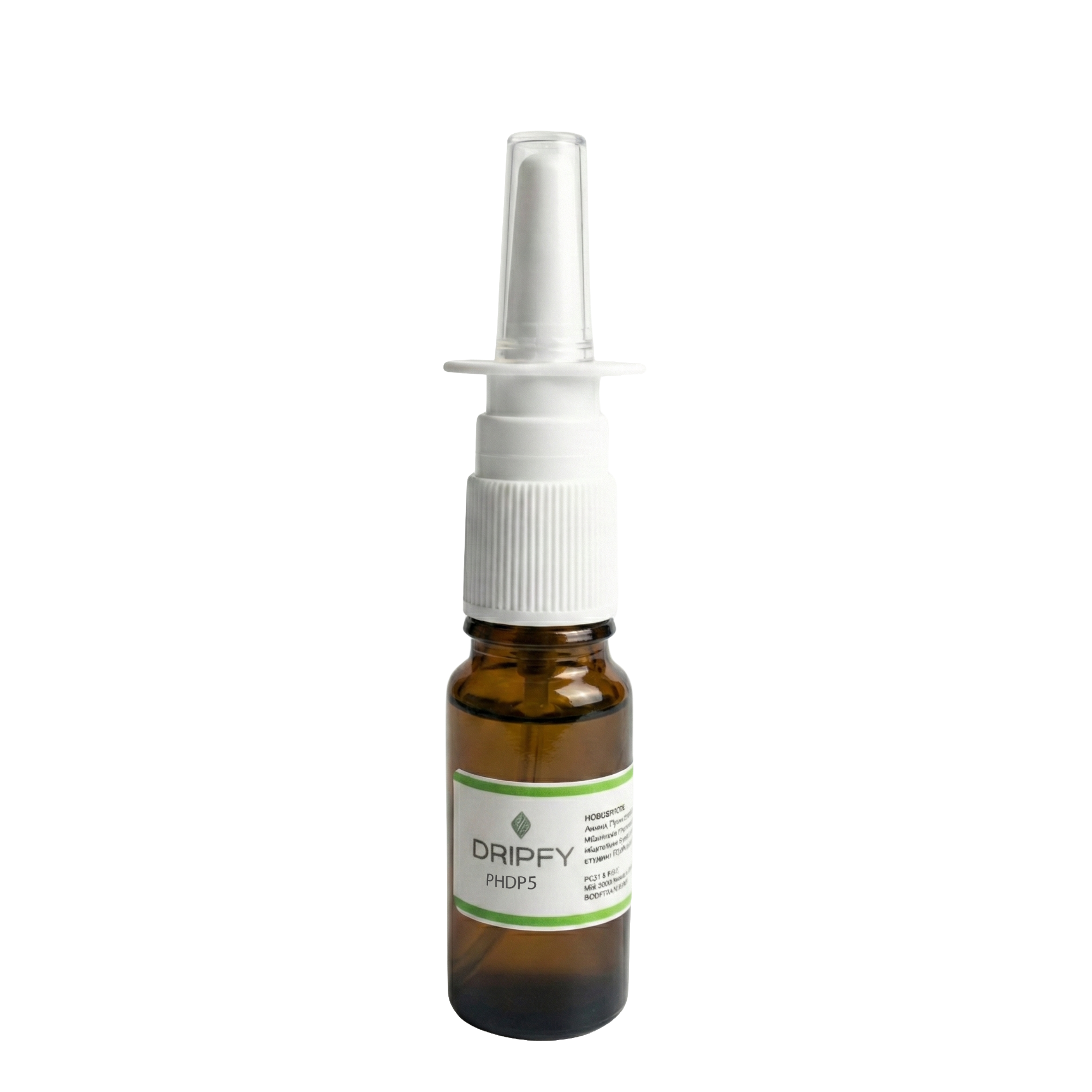
PHDP5 (Intranasal Spray)
Synthetic dynamin-1-derived peptide (dynamin–microtubule interaction inhibitor) · Intranasal spray
PHDP5 is a synthetic 12-amino-acid peptide matching residues 560–571 of the pleckstrin-homology domain of dynamin 1, a protein required for synaptic vesicle endocytosis. In Alzheimer's synapse models, excess soluble tau assembles new microtubules that sequester dynamin, slowing vesicle recycling and weakening neurotransmission; PHDP5 acts as a dominant-negative inhibitor of the dynamin–microtubule interaction and attenuated these deficits in brain-slice experiments. In two Alzheimer's model mouse strains, a cell-penetrating-peptide-modified form given intranasally reached the hippocampus and restored spatial learning and memory. No human data exist.
Studied use areas
- Synaptic vesicle recycling and neurotransmission (preclinical concept)
- Tau-related synaptic dysfunction in Alzheimer's disease models
- Spatial learning and memory endpoints (mouse data)
- Intranasal nose-to-brain peptide delivery research
Safety & status
- No human safety or tolerability data; not an approved medicine
- Studied in animals only, partly as a modified (cell-penetrating, fluorescently labelled) research form — findings may not transfer to this formulation or to humans
- Nasal application — follow the supervising physician's instructions and avoid contact with the eyes
- Requires physician assessment before any use, particularly in people with neurological conditions
⚕ Clinical note: This is educational information only and not medical advice. PHDP5 is an early-stage research peptide supported only by laboratory and mouse studies; it is not a treatment for Alzheimer's disease or memory loss. Any use must be assessed and supervised by a treating physician, who determines suitability on an individual basis.
Evidence: Preclinical — brain-slice and mouse data only, no human studies · References: Hori T et al. Microtubule assembly by tau impairs endocytosis and neurotransmission via dynamin sequestration in Alzheimer's disease synapse model. eLife. 2022;11:e73542; Chang CJ, Taoufiq Z et al. The microtubule-dynamin binding inhibitor peptide PHDP5 rescues spatial learning and memory deficits in Alzheimer's disease model mice. Brain Research. 2024. doi:10.1016/j.brainres.2024.148987; OIST press release (20 June 2024): Damage to synapses caused by Alzheimer's disease reversed