
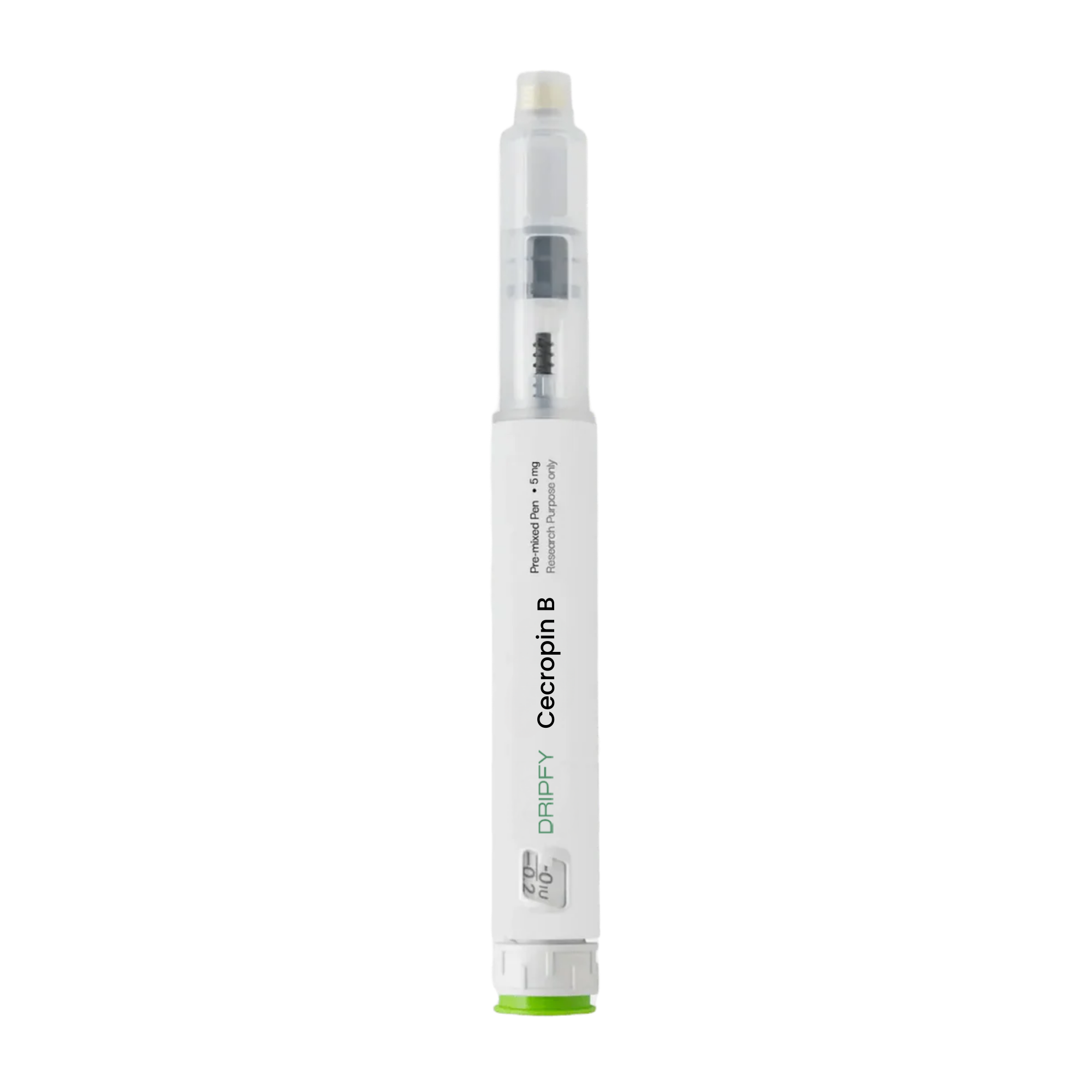
Cecropins (Cecropin B, Cecropin p17, Cecropin-LHRH — for mice)
What are they?
Cecropins are insect-derived antimicrobial peptides (AMPs) positioned primarily for controlled research use—here specifically referenced for mouse models. They are studied for their ability to disrupt microbial viability via direct membrane mechanisms, making them valuable tools in immunology and antimicrobial discovery frameworks.
Dripfy Advantage
- Membrane pore formation: Exhibit antimicrobial action through pore-forming interactions with microbial membranes.
- Cell integrity disruption: Compromise bacterial membrane stability, leading to loss of cellular integrity and microbial inactivation.
- Rapid mechanism class: Positioned as fast-acting AMPs via direct biophysical disruption rather than slow receptor-mediated pathways.
- Research-model specificity: Explicitly framed for mice research models, supporting translational immunology and infection-challenge studies.
Clinical Applications & Therapeutic Potential
- Immunology research tools: Valuable for studying innate defence mechanisms, AMP biology, and host–pathogen dynamics in controlled settings.
- Antimicrobial template development (research-stage): Positioned as scaffolds for developing novel antimicrobial agents and peptide-engineering pipelines.
- Mouse-model application: Specific utility for murine studies investigating infection control, microbial resistance, and immune activation markers.
- Mechanistic discovery value: Supports experimental interrogation of membrane biology and microbial susceptibility pathways.
Composition & Formulation
- Class: Cecropin family antimicrobial peptides (AMPs)
- Format: Research-only formulations (including conjugate designs such as LHRH-linked constructs)
Clinical Applications & Therapeutic Potential
Composition & Formulation
Cecropins (Cecropin B, Cecropin p17, Cecropin-LHRH — for mice)
Sale price£350.00
Regular price
Choose options
Cecropins (Cecropin B, Cecropin p17, Cecropin-LHRH — for mice)
Sale price£350.00
Regular price