
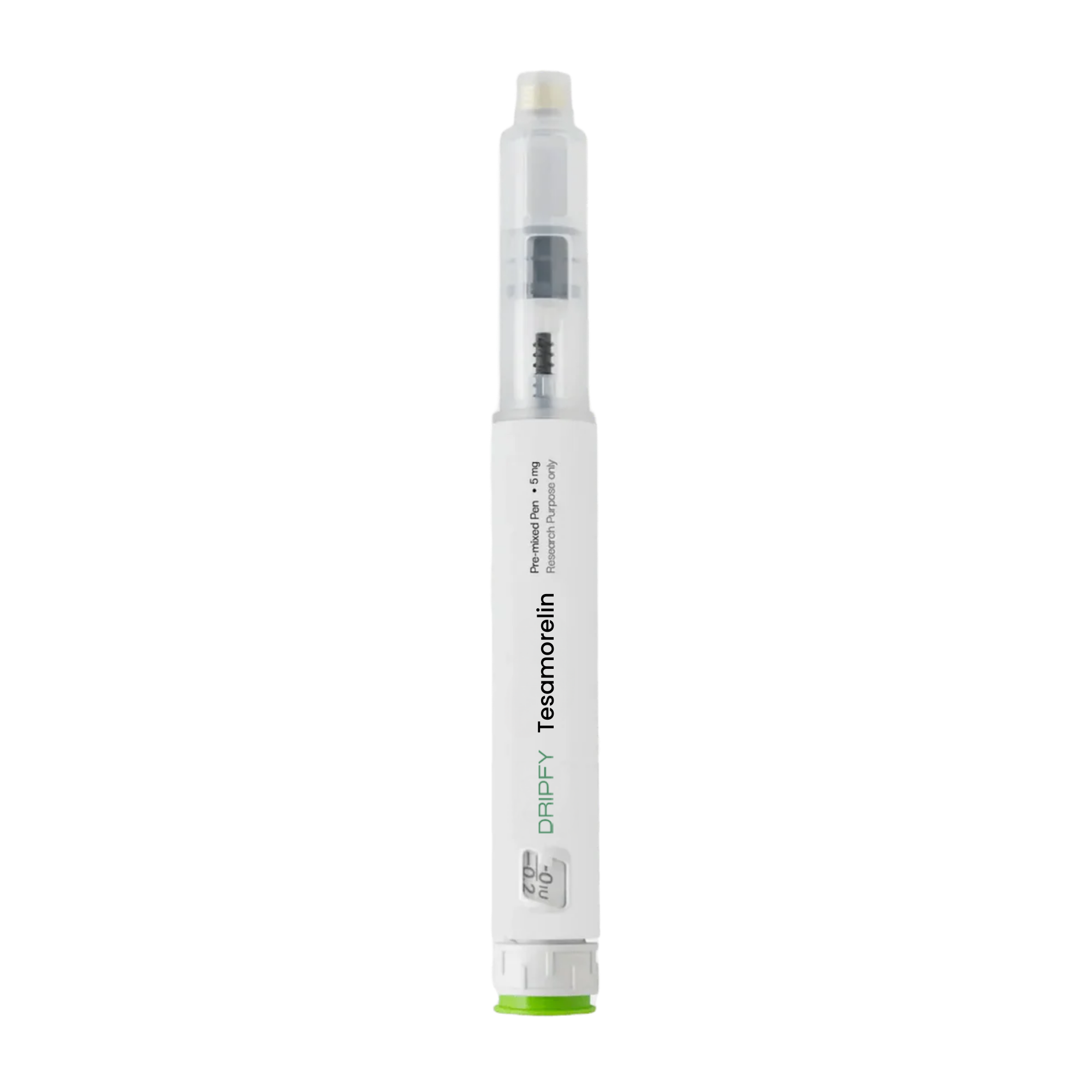
Tesamorelin
Growth hormone–releasing hormone (GHRH) analogue · Pre-filled pen
Tesamorelin is a stabilised analogue of growth-hormone-releasing hormone (GHRH) that binds pituitary GHRH receptors and stimulates the body's own GH secretion through the natural hypothalamic–pituitary axis. It is best known for, and approved only for, reducing excess visceral adipose tissue in a specific HIV-associated condition (approved by the US FDA and Health Canada; it is not authorised by the MHRA or EMA), with related improvements in lipid markers while glucose regulation requires monitoring. Its use for general lean-mass support or anti-ageing is off-label and not established by outcome trials.
Studied use areas
- Research into stimulation of the endogenous GH axis
- Visceral-adiposity and body-composition research
- Lean-tissue-preservation research
- Glucose–lipid metabolic-marker research
Safety & status
- Educational information only — not medical advice; use requires physician supervision
- Prescription-only medicine approved (US FDA, Health Canada) only for a specific HIV-related indication; not authorised by the MHRA or EMA, and other uses are off-label
- Can affect glucose regulation and fluid balance and is not suitable in certain conditions, so clinical screening is essential
- Prohibited in competitive sport: listed under WADA Prohibited List class S2 (peptide hormones, growth factors, related substances and mimetics — GHRH analogues, where tesamorelin is named)
- Suitability, indication and monitoring are determined by the treating physician
⚕ Clinical note: This card is educational and is not medical advice, a protocol or a promise of results. Tesamorelin is a prescription-only medicine; any use must be individualised and supervised by a qualified physician.
Evidence: Grade B — approved (US FDA, Health Canada) for excess abdominal fat in HIV-associated lipodystrophy, supported by randomised trials; not authorised by the MHRA/EMA, and lean-mass / GH-axis uses are off-label · References: Falutz et al., New England Journal of Medicine 2007; Falutz et al., Journal of Clinical Endocrinology & Metabolism 2010; FDA prescribing information (EGRIFTA SV / EGRIFTA WR); Health Canada product monograph (EGRIFTA); EMA: withdrawal of the Egrifta marketing-authorisation application (2012)